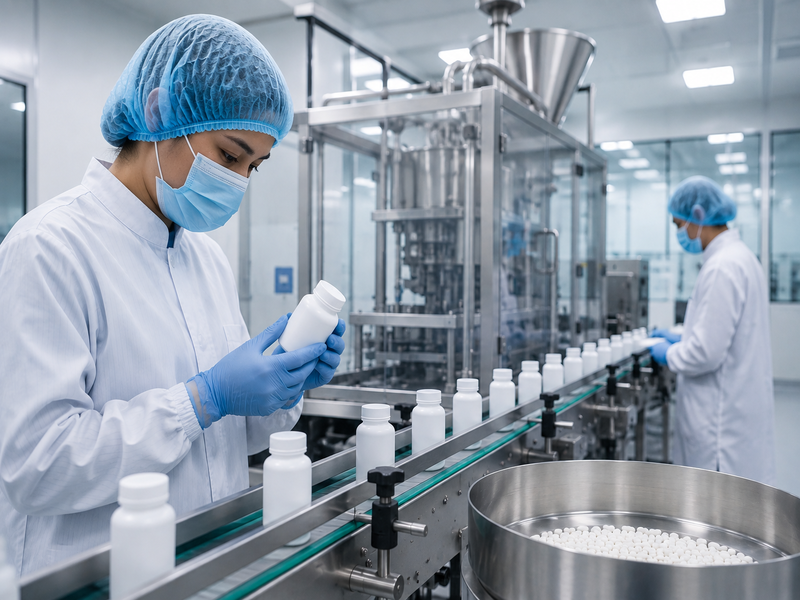
When you take any medicine, you anticipate that it is safe, hygienic and prepared using the correct ingredients. Yet, what do pharmaceutical companies do to ensure that each pill, capsule is of the necessary quality? This is where GMP certification plays an important role.
GMP is abbreviated as Good Manufacturing Practices. It gives a vivid guideline on how to make, test, store and handle pharmaceutical products. The practices will enable companies to minimize mistakes, contamination, and maintain the uniform quality of products.
The GMP certification demonstrates that a manufacturing facility is operating with recognised Good Manufacturing Practices. They encompass the entire manufacturing process in which raw materials are received, manufactured, packaged, tested, stored and distributed in finished goods.
What is the importance of GMP in the pharmaceutical industry?
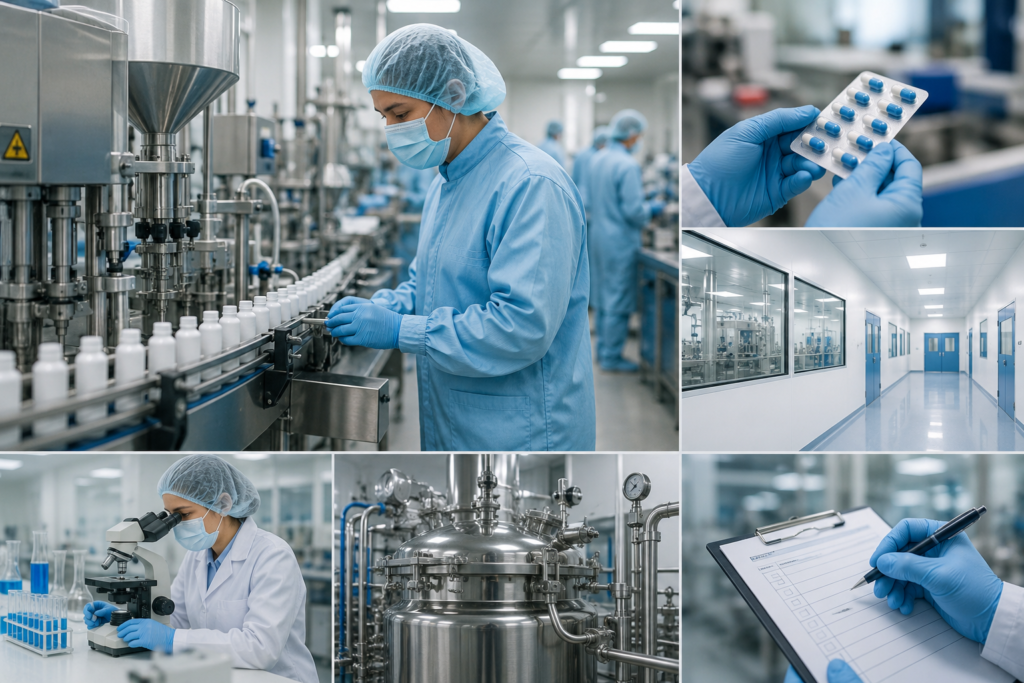
Medicines directly affect people’s health. Their safety or effectiveness can be impacted even by a minor manufacturing error.
Following GMP helps pharmaceutical manufacturers:
- Be consistent in product quality.
- Minimise the risks of contamination.
- Avoid mistakes in manufacturing and labelling.
- Maintain proper records of production.
- Train employees properly
- Identify and manage quality problems
- Meet regulatory requirements
- Keep patients safe and gain trust.
10 Essential GMP Principles in Pharma
1. Maintain Clean Manufacturing Environment.
Manufacturing zones and pharmaceutical manufacturing areas should be clean. The cleaning and sanitation periodically can minimize the chances of dust, germs, chemicals, or other undesirable substances contaminating medicines.
2. Follow Clear Written Procedures
Written procedures should be important to manufacturing activities. The employees should have a clear guideline on what to do, how to do it and what the standard is to uphold. This eliminates misunderstandings and errors.
3. Document Every Important Activity
Another GMP strategy is that important work must be well documented. Manufacturing records, test results, cleaning records, and other documentation confirm that the necessary procedures were adhered to.
Good documentation also simplifies tracing a problem in case something goes wrong.
4. Train Employees Properly
Employees ought to know their responsibilities and be provided with appropriate GMP training. The training can include hygiene, equipment usage, safety, documentation, production processes, and quality.
They should also update training in case of any changes in processes or responsibilities.
5. Use Suitable Facilities and Equipment
There should be buildings and equipment that are appropriate to manufacture pharmaceuticals. Equipment should be taken care of properly, cleaned, maintained, and inspected.
Poorly maintained equipment may result in contamination, incorrect measurements, or production issues.
6. Control Raw Materials
The material of a medicine is of very high importance in the quality of the medicine. The receipt, identification, storing, testing, and approval of raw materials within acceptable procedures should precede their use.
Appropriate controls are used to avoid entry of inappropriate materials into production.
7. Validate Important Processes
Manufacturers ought to know of processes of importance that yield all time the anticipated outcomes. This is referred to as validation.
For example, a company may validate its manufacturing, cleaning, or testing processes. Validation assists in enhancing uniformity as well as minimising unforeseen issues.
8. Have Good Quality Control.
Quality control is a critical aspect of GMP. Pharmaceutical products and materials are required to be tested against specifications.
In case a batch fails to meet the necessary standards, the issue is to be examined prior to the discharge of the product.
9. Managing Complaints and Problems correctly.
Quality issue like customer complaints, product defects, deviation and other problems should not be overlooked. Companies should investigate the cause and take suitable corrective and preventive actions.
In case the product presents a serious safety or quality issue, it must also have a good system of recall.
10. Make Routine Audits and reviews.
Compliance with GMP must be monitored. Quality review and internal audit can assist firms identify areas of weakness, which firm before they become bigger problems.
The findings of the audit can guide manufacturers to enhance processes, practices of the employees, documentation and the overall quality of a product.
Final Thoughts
GMP certification is an important part of pharmaceutical manufacturing. It demonstrates that a facility has organized practices that are aimed to keep product quality and minimize risks.
The 10 critical GMP principles encompass all the aspects of cleanliness, training of workers, documentation, testing, validation, as well as periodic audits. Once such principles are introduced into everyday activities, they would enable pharmaceutical corporations to manufacture drugs with more regularity and ensure patient safety and regulatory compliance.