

Medicine has to be safe and should meet certain standards of quality as well.
Even if there’s some sort of mistake while manufacturing medicines, that could impact their quality. For example, a tablet containing the wrong quantity of medicine getting contaminated.
Hence, quality control plays a significant role in the Pharmaceutical Industry to identify these issues at various stages of production.
So, let’s talk about different types of quality control in the pharmaceutical industry.
What Is Quality Control In the Pharmaceutical Industry?
In simple words, Quality control means testing and checking medicines as per the required standard. This includes checking the raw material, monitoring the manufacturing procedure, and testing the final product. The goal of Quality control is to ensure that all medicines have proper ingredients, strength, and quality.
Quality control also ensures that pharmaceutical companies adhere to good manufacturing practices (GMP), as well as various other safety regulations.
5 Different Types of Quality Control in Pharmaceutical Industry
Pharmaceutical companies apply various techniques for maintaining quality control at every step during the process of pharmaceutical manufacturing.
The following are 5 types of these techniques-
1. Raw Material Quality Control
Quality checks start before we actually start producing the medicine.
For example, if you have raw materials (active ingredients, chemicals, and other substances used for making medicines), then you need to ensure that these materials conform to required standards before putting them into use.
During this stage, manufacturers check:
It ensures that all the identities and purities of your ingredients are as you want them to be.
Also, you ensure the quality of your chemicals and other materials by checking for the presence of unwanted substances.
Lastly, there’s compliance with the material specs – ensuring everything meets certain standards.
So suppose you have a raw ingredient with some impurity beyond an acceptable range? Then that doesn’t make its way into your production line.
And when you get these tests done earlier, you prevent low-grade items from tainting the rest of this batch!
2. In-Process Quality Control (IPQC)
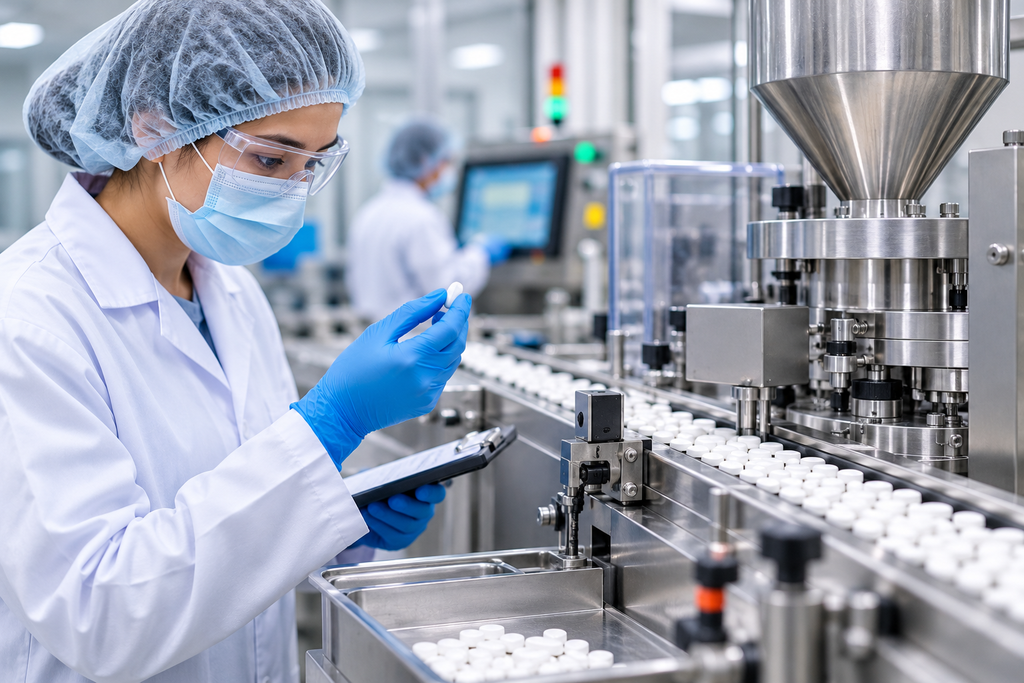
The idea is to perform in-process quality control while they’re still manufacturing your medicine. Rather than waiting for production to be finished, manufacturers will test their products at various points along the way, allowing them to spot issues as soon as possible.
Some common checks include:
- Tablet weight and thickness,
- Hardness of tablets, mixing of ingredients,
- Filling accuracy of capsules and liquids.
If your tablets weigh differently, then you can dig into this issue with the production team to get things corrected.
Such regular checks ensure that all manufacturers are maintaining these set standards across their entire manufacturing process, which helps them prevent unnecessary wastage as well as avoid manufacturing mistakes happening repeatedly.
3. Finished Product Quality Control
Once manufacture has been completed, the final medicinal product will then be subject to a number of tests which ensure that it meets the necessary quality specifications.
Common tests include:
- Drug strength and purity – e.g., a tablet contains the right amount of active ingredient;
- Tablet dissolution – e.g. In its final state, the tablet dissolves properly;
- Appearance and physical condition of tablets and other forms;
- Microbial contamination, if applicable;
- Correct packaging and labeling.
If the finished product doesn’t pass these tests, then it can’t go on sale.
Quality control teams will review all this data prior to approving a batch for release.
4. Stability Quality Control
Medicines will lose strength or quality if stored for long periods of time due to heat, moisture, or other storage conditions.
Stability QC determines whether they remain effective when stored.
This is done by having manufacturers store samples under controlled conditions and testing them at regular intervals.
These tests help determine:
- How long the medicine will remain effective.
- Does the quality of this medicine change with time?
- What are the suitable storage conditions for storing this medicine?
- What is the expiry date on this product?
5. Microbiological Quality Control
Microbiological quality control ensures that medicines do not contain harmful microorganisms, such as bacteria and fungi.
This form of testing is particularly relevant to products considered to be ‘sterile’
The main checks include:
- Microbial contamination testing
- Sterility testing drops.
- Bacterial endotoxin testing
- Monitoring of clean manufacturing areas
Conclusion
Quality control plays an important role at each step of the process for producing pharmaceuticals. This includes evaluating raw materials, conducting final tests, and storing products. Each type of quality control performs a unique function, and collectively they allow manufacturers to create safe and effective medicine that meets required quality standards.