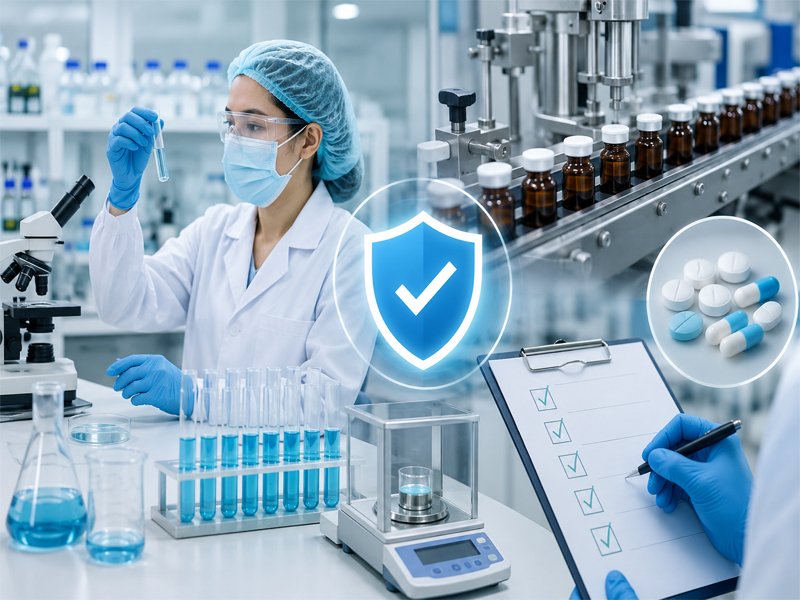
When we produce medicines, we don’t simply safeguard the health of the people but also make sure that safe and efficacious products are always available. However, even a slight error in the manufacturing of a drug may cause deterioration of product quality, safety and efficiency. Pharmaceutical quality control has been the center of focus for the medical industry. It is a way to make sure that the medicines dispensed to the patients comply with high safe and regulated standards.
What is Quality Control in the Pharmaceutical Industry?
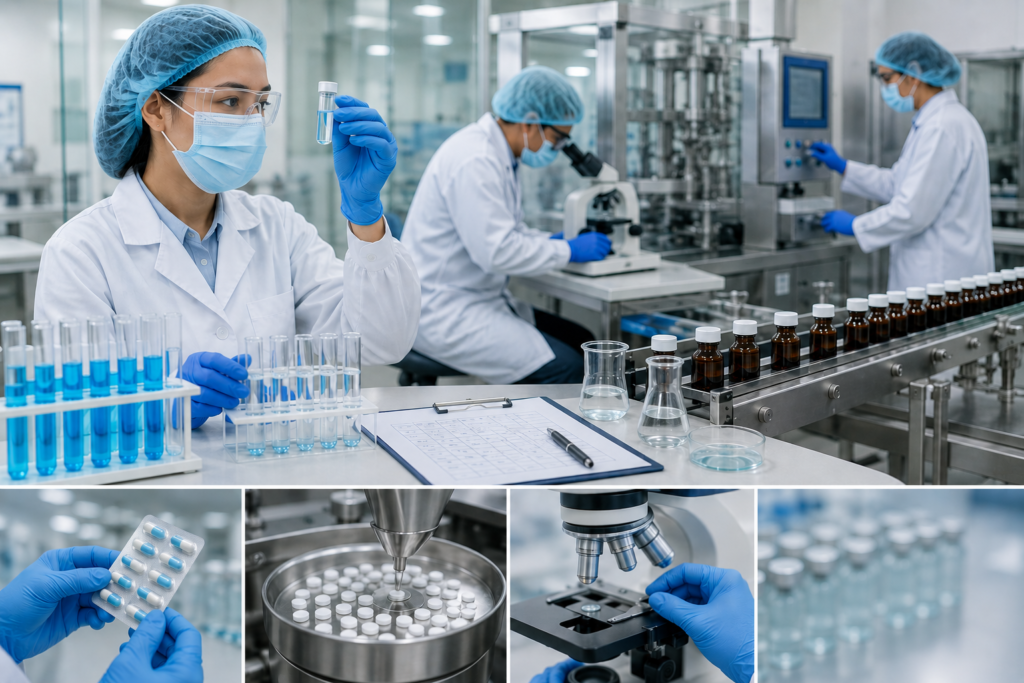
Quality Control is a term used in the pharmaceutical industry for the entire procedure of testing pharmaceutical products and determining whether their quality standards are met as per the standards set in advance. It involves testing of raw materials, monitoring of production processes and labor, and testing of finished products before their release to the market.
The chief aim of quality control is to make sure that pharmaceuticals:
- They are safe to be consumed
- They are efficacious in treatment
- Have no contamination
- Are produced uniformly
- Comply with regulatory standards
Why Quality Control is Important in Pharmaceuticals
Ensures Patient Safety
The main goal of quality control is to protect the patient from getting injured or receiving a bad quality product. If done correctly, testing will reveal contaminants, impurities, or errors in the composition of the products before the products are released to the market.
Maintains Product Consistency
Every batch of a drug must have the same effect on the patient. Quality control ensures that, through ingredient control, dosage, packaging, and performance, uniformity is maintained.
Supports Regulatory Compliance
Various regulatory bodies like the World Health Organization (WHO), the US FDA, and Good Manufacturing Practices (GMP) have set very stringent regulations for the pharmaceutical industry.
Reduces Manufacturing Errors
Production problems can be detected very early by constant monitoring and testing. As a result, the defective products that are discarded, recalled and the corresponding financial losses will be minimized.
Builds Consumer Trust
Healthcare practitioners and the general public count on pharmaceutical companies to deliver safe medications. Quality control practices help to improve the company’s image and brand trust.
Key Components of Pharmaceutical Quality Control

Raw Material Testing
All raw materials are checked for identity, purity and quality before manufacturing starts. Contaminated raw materials can severely affect the quality of the end product. That means it is essential to do raw material inspection.
In-Process Quality Checks
Processing sample units, mostly in the initial stage of production as well as at regular intervals, is necessary to control and confirm that no changes are made to the product and production parameters are within the specified limits.
Finished Product
Testing Post manufacturing, the product is subjected to a battery of tests, such as:
- Chemical composition
- Stability
- Dissolution rate
- Aseptic properties
- Packaging quality
- Shelf life
Environmental Monitoring
Pharmaceutical manufacturing environments should be kept clean and free from contamination at all times. To produce a quality product, it is best to monitor conditions such as microbial control, air quality, humidity, and temperature.
Documentation and Record Keeping
Documentation is indispensable in the field of pharmaceutical quality control. Keeping thorough records would be not only a good way to ensure traceability and meet regulatory requirements, but also to demonstrate transparency during audits.
Technology’s Impact on Pharmaceutical Quality Control
The pharmaceutical industry is always leading the way in adopting new systems to enhance quality control. Apart from sharpening accuracy and reducing errors made by humans, these types of systems also make performing tests faster.
Pharmaceutical quality control frequently uses what comes next techniques:
- High-Performance Liquid Chromatography (HPLC)
- Artificial Intelligence (AI)
- Laboratory Information Management Systems (LIMS)
- Automated inspection systems
- Spectroscopy techniques
Challenges in Pharmaceutical Quality Control
Complex Regulatory Requirements
The pharmaceutical laws differ from one country to another. For global producers, it may be challenging to ensure the compliance of their products in many markets simultaneously.
Risk of Contamination
The hazard of cross-contamination continues to be one of the major issues in the pharmaceutical manufacturing industry. Such a hazard can be Quite a bit reduced by implementing strict hygiene and environmental controls.
High Operational Costs
Advanced testing equipment, skilled manpower, and regulatory compliance can significantly increase the cost of operation.
Data Integrity Issues
Consider maintaining precise and well-protected records. By making sure that the documents are accurate, you will be able to prevent compliance failures and regulatory penalties.
Conclusion
Quality control is very important in the pharmaceutical industry as it is the only way to ensure that pharmaceutical products will be safe, effective, and meet demanding healthcare standards. Proper quality control methods not only guarantee the production is of excellent quality, but they also include the safety of the patients, as final product testing is the culmination of raw material inspection and quality production.