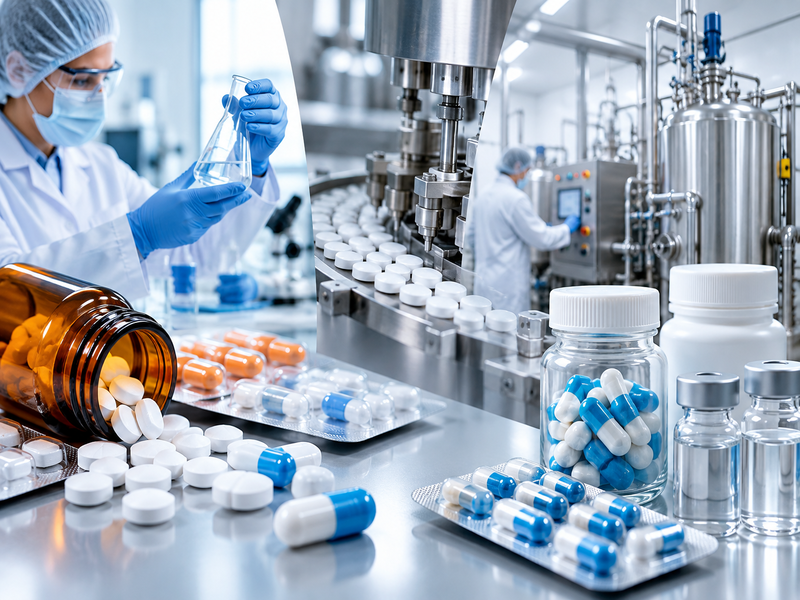
When we swallow a pill for headache, or a spoonful of cough syrup, we cannot imagine how it is produced. We simply take it for granted that it will work. However, behind that little tablet or bottle lies a long manufacturing process.
Pharmaceutical Manufacturing is essentially a large scale production of medicines. It starts with choosing and preparing ingredients. The medicine is then compounded, tested, packaged, labeled and stored and finally dispensed at a pharmacy, hospital or health care institution.
Pharmaceutical Manufacturing: What Is It?
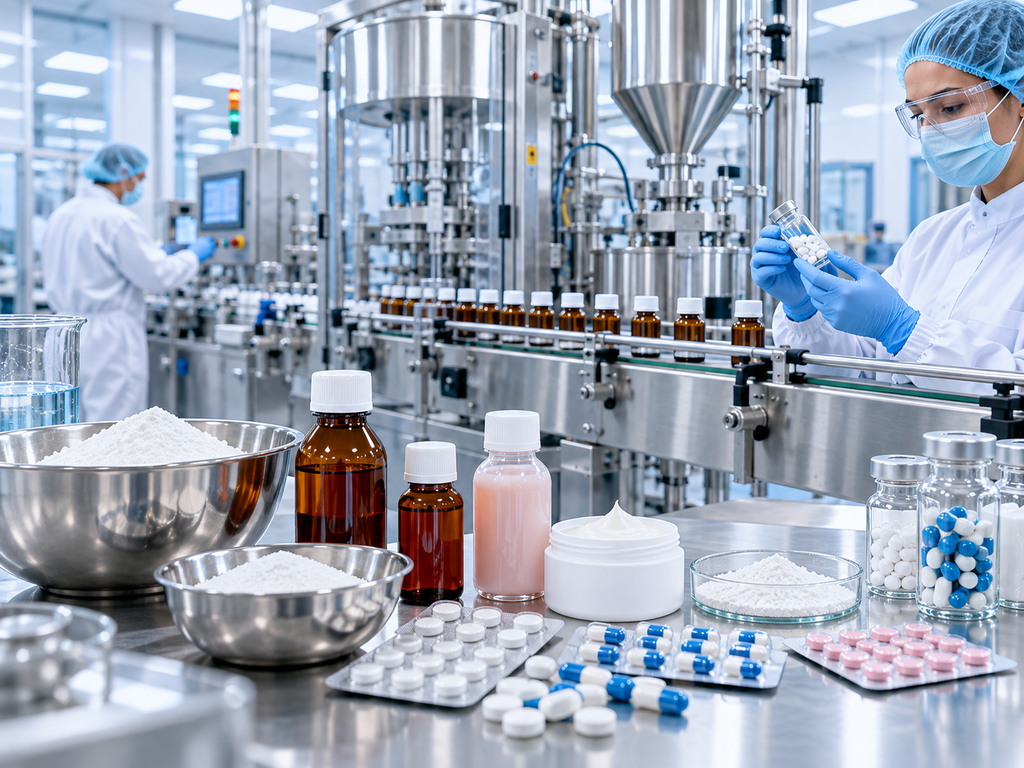
To put it simply, pharmaceutical manufacturing is the activity of creating medicines from pharmaceutical ingredients that can be used by people.
Medicines are made in a specially controlled manufacturing unit with special equipment and procedures. They can be in a variety of forms, such as:
- Tablets
- Capsules
- Syrups
- Powders
- Creams and ointments
- Suspensions
Typically, it starts with raw materials. Ingredients of a given medicinal product are measured according to a formula.
Different Types of Pharmaceutical Manufacturing
Pharmaceutical products can be made in a number of ways. There are companies that manufacture medicines in their own manufacturing plants. Others rely on external production for a portion or all of their production.
1. Third-Party Pharmaceutical Manufacturing
Third-party manufacturing is common in the pharmaceutical industry.
It is a model in which one company manufactures medicines for another pharma company. A brand may desire to sell its own line of drugs but might not have a factory. It doesn’t need to construct one, but can work with an existing manufacturer.
The manufacturer is responsible for the production in accordance with the agreed requirements. This can save the pharma brand the cost of setting up its own manufacturing plant, saving time and money. The company is then able to dedicate more resources to other aspects like sales, distribution and marketing.
2. Contract Manufacturing
Contract manufacturing is essentially the same, but the manufacturing is done under a specific contract between the two companies.
The contract can include the kinds of products that must be produced, the quantity, the quality specifications and how the products are to be packaged.
This may be helpful for a pharmaceutical company that does not have enough production capacity or would like support with the production of certain products.
3. Private Label Manufacturing
Looking to market a pharmaceutical or healthcare product with your brand? A method to do this is private label manufacturing.
In this instance, the product is manufactured by one company and sold by a different company under its own brand. As part of the agreement, the manufacturer may also handle the packaging and labelling.
It is a model that can be very helpful to a business wishing to introduce a product range without having a production unit of its own.
4. API Manufacturing
All medicines require a substance that provides the desired health effect. This is referred to as the Active Pharmaceutical Ingredient (API).
API manufacturing deals specifically with making these active ingredients. An API and other appropriate ingredients can be subsequently blended to form the dosage form. It may be a tablet, capsule, liquid medication or other type of pharmaceutical product.
5. Formulation Manufacturing
But an API alone is not necessarily easy for a patient to use. This is where formulation manufacturing is involved.
The active ingredient is mixed with other ingredients to make the medicine during the formulation process.
In the case of a tablet, for example, the ingredients can be mixed and processed, and then compressed into the necessary shape. There are different methods of production for syrups, capsules and creams.
Therefore, the process is different depending on the dosage form being produced.
6. Injectable Manufacturing
Extra care is required during the manufacture of injectables as the medicine is put directly into the body.
This may include liquid injections, intravenous products and some dry powder injections.
One of the major issues here is sterility. The manufacturing setting, equipment and processes need to be carefully controlled to minimise the risk of contamination. Injectable production therefore requires specialised manufacturing processes and facilities.
7. Herbal and Nutraceutical Manufacturing
Not all healthcare manufacturing companies are engaged in producing traditional medicines. Some of them also produce herbal products and nutraceuticals.
These can be vitamins, minerals, dietary supplements, herbal syrups, protein products and other health and wellness products.
Ingredients and processes used in the manufacture of these products can vary considerably from product to product.
Conclusion
Pharmaceutical manufacturing involves the process of converting raw materials into finished products. It encompasses preparation, production, testing, packaging, labelling and appropriate storage.
The process could be different for each product. The need for controlled production and proper quality checks does not change. These are necessary measures to ensure that medicines are manufactured to achieve the desired quality prior to reaching the patient.