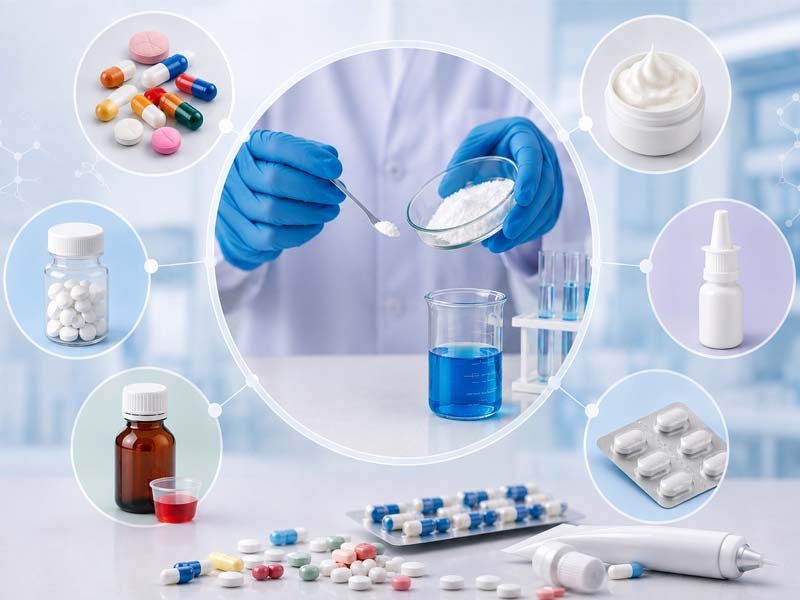
A medicine has more than its active ingredient. It is also a mixture of other well-chosen ingredients that contribute to its safety and effectiveness. All this complexity is called a pharmaceutical formulation. All pills, capsules, syrups and creams are prepared with a special formula to help the drug get to the correct area of the body and to have the effect it will produce.
Here, you will get to know what formulation means in the pharma industry, its importance, and the different types of pharmaceutical formulation used in the medical industry.
What Is Formulation in the Pharma Industry?

In the pharma industry, formulation is the mechanism of mixing an active pharmaceutical ingredient (API) with other constituents referred to as excipients, so as to form a complete medicine.
Active ingredient is a substance that treats or prevents a disease, whereas excipients enhance stability of the medicine, taste, appearance, absorption, and shelf life of the drug.
Pharmaceutical formulation aims to create medicines that are:
- Safe to use
- Effective in the management of health issues.
- Administered conveniently by the patients.
- Good in storage and transportation.
- Equal, batch-to-batch consistency.
In the case of paracetamol pills, the active ingredient is paracetamol, binders, fillers, and coating that help the pill maintain its structure, as well as dissolve when the pill is swallowed.
What Are the Types of Formulations?

Pharmaceutical preparations are formulations in different forms that have been developed for a specific mode of administration. This will depend on the condition of the patient, his age, and the way the drug must work.
1. Solid Formulations
The most common type of medicines is solid dosage forms, which are often easy to store, transport, and administer.
Examples include:
- Tablets
- Capsules
- Powders
- Granules
Such formulae are relatively long-lasting and make it possible to give the right dosing.
2. Liquid Formulations
Liquid preparations are appropriate for children, the elderly, and people who cannot swallow pills.
Examples include:
- Syrups
- Suspensions
- Solutions
- Oral drops
They are also used when the medicines need rapidity.
3. Semi-Solid Formulations
Locally treated are semi-solid preparations directly applied to the skin or mucous membranes.
Common examples are:
- Creams
- Ointments
- Gels
- Pastes
- Lotions
The products are normally used to treat skin infections, burns, inflammation, and allergies.
4. Inhalation Formulations
These preparations administer medication to the lungs.
Examples include:
- Metered-dose inhalers
- Dry powder inhalers
- Nebuliser solutions
They are widely prescribed in asthma, COPD and other respiratory diseases.
5. Topical and Transdermal Formulations
Topical medicines act on the skin surface, and transdermal products bring the medicine via the skin to the blood.
Examples include:
- Medicated patches
- Sprays
- Foams
- Skin solutions
These are commonly applied in treating pain, hormone replacement, as well as in quitting smoking.
Important factors to note when creating a Pharmaceutical.
Pharmaceutical scientists consider various aspects before creating a drug.
These include:
| Factor | Why It Matters |
| Drug stability | Ensures the medicine remains effective throughout its shelf life |
| Solubility | Helps the medicine dissolve and be absorbed properly |
| Dosage form | Determines how the medicine will be taken |
| Patient convenience | Improves treatment adherence |
| Manufacturing process | Supports consistent product quality |
| Regulatory requirements | Ensures compliance with safety and quality standards |
Challenges in Pharmaceutical Formulation.
It is not necessarily easy to develop a pharmaceutical formulation. Researchers are more likely to encounter several challenges, including:
- Poor drug solubility
- Maintaining chemical stability
- Guaranteeing a stable supply of drugs.
- Improving patient acceptance
- Compliance with high levels of regulations.
- Mass production to sustain commercial production.
Conclusion
The definition of formulation in the pharma industry is useful in the development of medicines to be safe, effective, and user-friendly. A pharmaceutical formulation is more than just an amalgamation of ingredients; it is a cognitive process that ensures every drug functions as intended.