There are numerous important inputs and activities in the pharmaceutical industry necessary to make safe and effective pharmaceuticals. The API is one of the critical ones of all medicines. Pharmaceutical products will not have the same therapeutic effects without APIs. APIs are an integral part of every pharmaceutical company, health care organization, and medicine developer.
What Is an API?
Active Pharmaceutical Ingredient (API) is a term used for the ingredient. In the case of a medical condition preparation, it is most important in the preparation used to treat the medical condition where it produces the desired effect. The API might act as a substance used for treating, preventing, or ruling out a disease or medical condition.
Why Are APIs Important in Pharmaceutical Manufacturing?
All pharmaceutical products are made from APIs. They explore with investigation What works and What does not, and How safe, or not, is the medicine? How good or not is the quality of the medicine? Before using APIs in drug production, pharmaceutical manufacturers need to guarantee the APIs are of high quality.
A good API is useful for the following:
- Effectively and consistently provide the desired therapeutic effect
- Make sure that products are safe and uniform.
- Meet regulatory requirements
- Improve patient outcomes
- Provide product stability and shelf life.
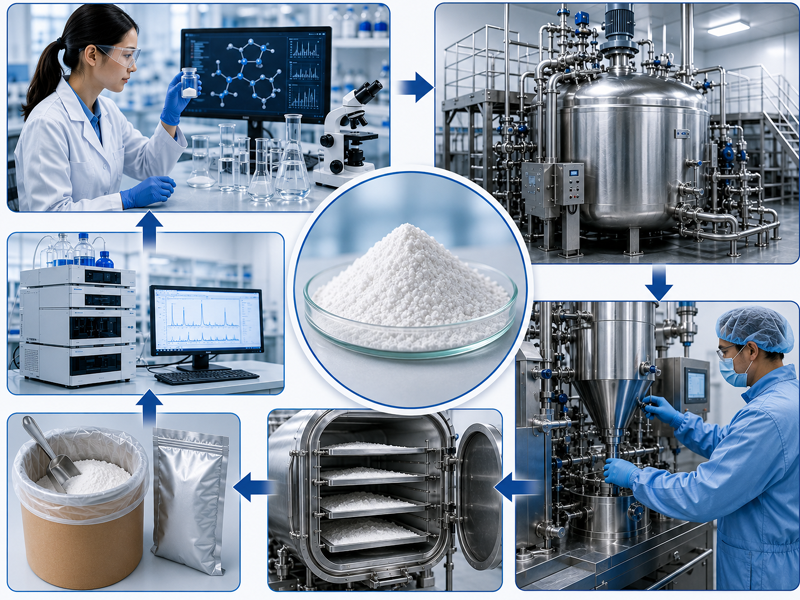
How Are APIs Manufactured?
1. Research and Development
The active ingredients which could be used to treat a particular disease are identified and developed by scientists. The API undergoes a lot of testing prior to going to production.
Synthesis involving chemical and/or biological reactions.
2. Chemical/Biological Synthesis.
The API is synthesized by chemical reactions or biological procedure. Traditional medicines are generally chemically made, and the modern ‘biologics’ may be living cells or microorganisms.
3. Purification
The API is then purified following its production to get rid of impurities and unwanted by-products. An important step to ensure its safety and effectiveness.
4. Quality Testing
The API is identity, purity, and potency tested and is stable. The manufacturers’ conduct various tests to guarantee its quality meets regulations.
5. Formulation
Once approved, the API is combined with excipients (other ingredients) and formulated to tablets, capsules, injections or other dosage forms.
Types of APIs
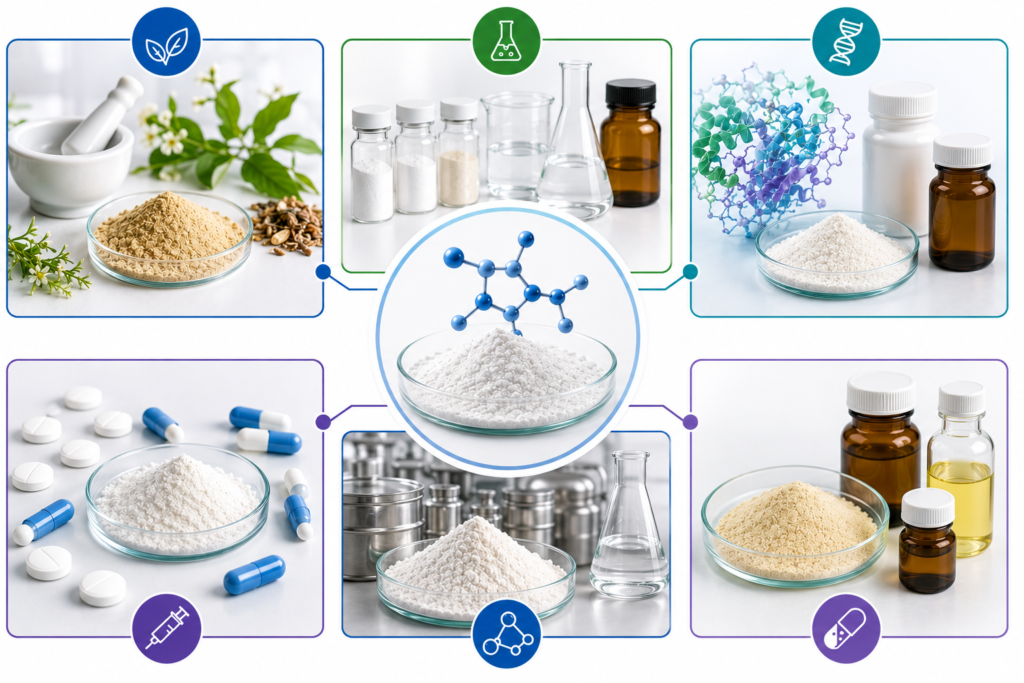
APIs could be separated into multiple categories based on their sources, and they can be prepared in a number of ways.
Synthetic APIs
They are produced in the lab and/or by factories in chemical reactions. Many popular pharmaceuticals are manufactured to contain synthetic APIs, as the product characteristics possible with them.
Biological APIs
A biological API is based on a biological process, cell, or organism. They are frequently employed in vaccines, insulin products, and complicated treatments.
Highly Potent APIs (HPAPIs)
The same APIs work very well at low doses to be very effective and powerful. They need to be processed in specific manufacturing facilities, and precautions must be taken for them.
Quality standards for APIs.
API manufacturing can only be carried out in accordance to specific regulations laid down by the pharmaceutical manufacturers. Manufacturers are required to meet the requirements of Good Manufacturing Practices (GMP) prescribed by regulatory authorities like the U.S. Food and Drug Administration (FDA) and the World Health Organization (WHO).
The most important quality items are:
- Consistent production processes
- Controlled manufacturing environments
- Thorough documentation
- These are carried out at regular intervals and when necessary.
- Comprehensive quality testing
Such measures ensure the safety, purity, and effectiveness of APIs over their lifecycle.
Challenges in API Manufacturing
Manufacturing API may be complex and challenging. Producers have common difficulties, including:
- Maintaining consistent quality
- Dealing with complex synthesis processes
- Meeting regulatory requirements
- Controlling production costs
- Enhancing the security of supply chain.
Conclusion
API’s or Active Pharmaceutical Ingredients are the actual active ingredient of the drug and it is responsible for the therapeutic effect. They are key to determining the effectiveness, safety, and quality of drugs. Each stage of the production of API from development, manufacturing and quality test, should satisfy a certain criterion. As the pharmaceutical industry constantly evolves, the need for quality APIs in the sustainability of effective and safe medicines that will meet international standards and provide better patient outcomes will not decline.