The pharmaceutical sector is vital to the global health, as they are responsible for creating medicines which deter, treat and manage illnesses. The production of a drug, on the other hand, is a complicated process and one that is highly regulated and could take years to produce a new drug. With which help stakeholders will appreciate the scientific and regulatory efforts that have been carried out in order to develop safe and effective medications?
What Is Pharmaceutical Product Development?
Pharmaceutical product development is the process which transforms the drug idea or active pharmaceutical ingredient (API) suitable for commercial release to become a pharmaceutical product ready for market. The scientific research, development of formulations, clinical trials, regulatory approval, and commercialization.
The main aim of pharmaceutical product development is to make sure that a medicine is safe, efficient, stable, and meets patients’ requirements. There is interaction among sponsors of formal or research studies, formulation scientists, clinical specialists, regulatory experts, and production personnel.
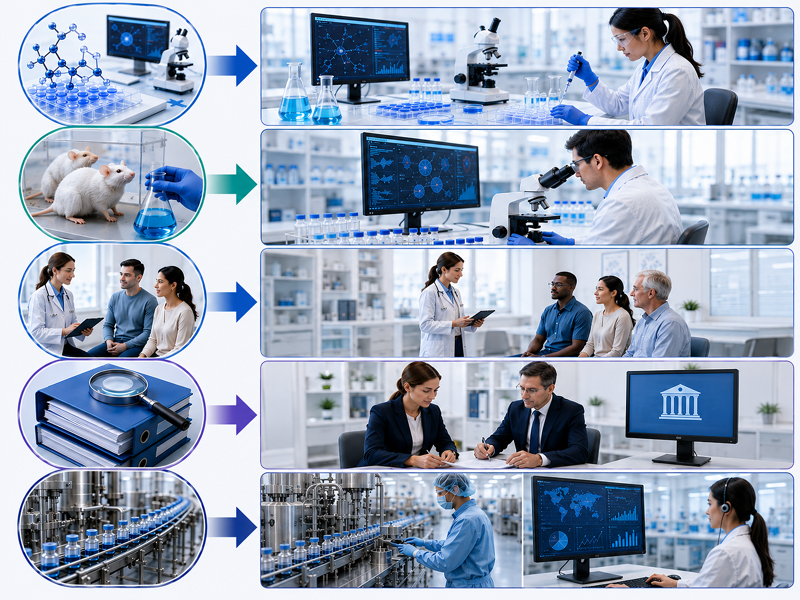
5 Stages of the Pharmaceutical Product Development Process
1. Drug Discovery and Research
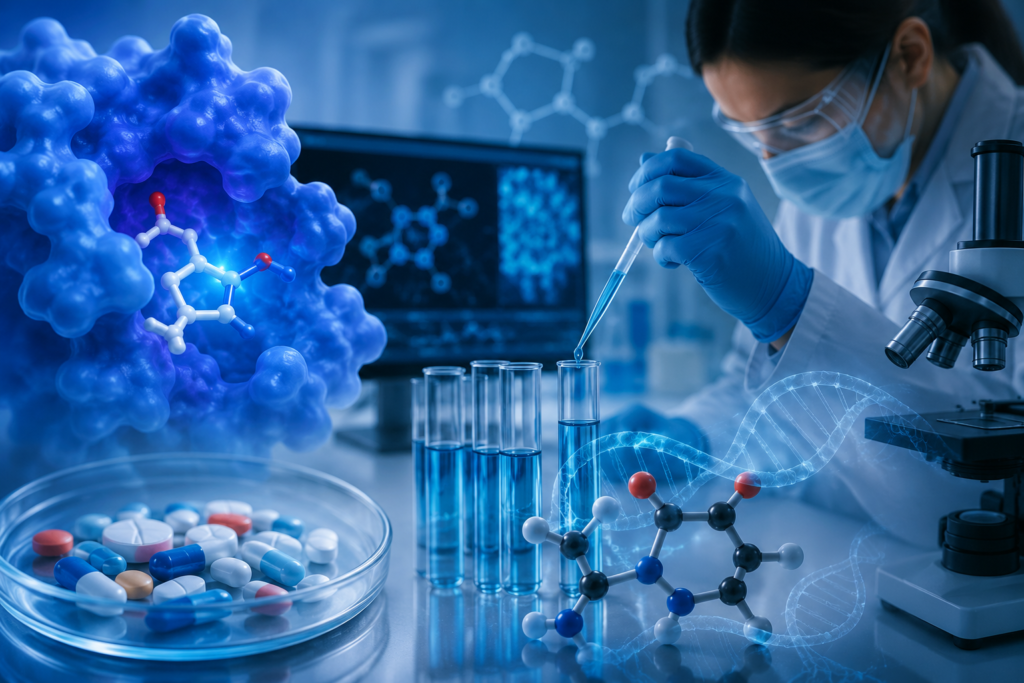
Identification of a potential drug candidate is the first step. Elucidation of therapeutic potential of compounds requires analysis of diseases, biological pathways and molecular targets.
Key activities include:
- Always try to achieve and verify your target.
- Compound screening
- Lead optimization
- Perform experiments and research in the lab.
2. Preclinical Development
Once drug has been identified, it comes through various stages in preclinical testing.
The objective was to assess the compound’s potential for safety and activity before moving onto human clinical trials.
Key activities include:
- Toxicity studies
- Pharmacokinetic analysis
- Pharmacodynamic evaluation
- Formulation development
- Stability testing
Laboratory testing often is performed in these studies to decide if the drug candidate would be a good choice for clinical trials. Information collected in this stage is then submitted to regulatory bodies for approval to take part in human testing.
3. Clinical Development
Clinical development is a testing process in human beings to feed back clinical safety, efficacy, and dosage of the drug with respect to humans.
Clinical trials can be broken down into three phases:
Phase I
A trial is done on a small group of healthy people to find out what the side effects are, what a good (safe) dose is, and to make sure the trial is safe.
Phase II
The drug is administered to people who have the condition that it treats to assess the drug’s effectiveness and appropriate dosage.
Phase III
The “large distance research,” which uses hundreds or thousands of individuals to prove efficacy, is performed, and adverse reactions are monitored.
The most time consuming and expensive test in the development of any pharmaceutical that intends to perform a test to determine the effectiveness and safety of the drug for patients to receive.
4. Regulatory review and approval
Once the clinical trials are completed, pharmaceutical companies can submit full information to regulatory agencies for review. Once the clinical trials are successful, a comprehensive clinical trial information set is submitted to the regulatory agencies for review.
Typically includes the following:
- Clinical trial data
- Manufacturing information
- Safety reports
- Quality control documentation
- Product labeling details
All evidence is reviewed and analysed by regulatory authorities before they decide whether a drug can be approved based on the ratio of benefits to risk. Once approved, the product is approved for commercial distribution.
5. Commercial Manufacturing & Post-Marketing Surveillance
After regulatory approval of drug enters into large scale manufacture and markets.
Key activities include:
- Commercial production
- Quality assurance testing
- Packaging and distribution
- Supply chain management
Development, though, doesn’t stop when a product has been launched. Post-marketing surveillance programs (PMS) are carried out and are continuing to monitor the drug.
Conclusion
The product development process in the pharmaceutical industry is a well-established process that can be repeated and concluded with a product that is commercially available to save lives. All stages are crucial to guarantee a safe, effective, and good product, ranging from drug discovery and preclinical tests to clinical trials, regulatory approval, and commercial production.