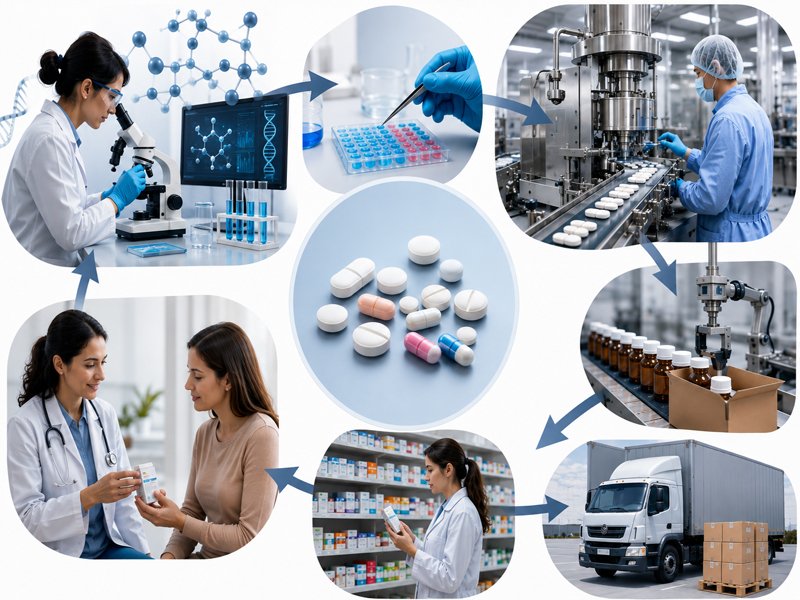
The pharmaceutical industry is a major part of modern healthcare, discovering, developing, manufacturing, and distributing medicines that enable patients to lead healthier lives. Each medicine (from a plain old painkiller to an advanced life-saving drug) undergoes a long and properly monitored process before it reaches patients. It is an industry that includes science, research, and technology as well as manufacturing and regulatory authority to ensure the safety of medicines.
Understanding the Pharmaceutical Industry
Pharmaceutical companies are those engaged in the research, development, manufacture, and marketing or distribution of medicines.
Growth of pharmaceutical sub-industries:
• Drug discovery
• Clinical trials
• Production and formulation
• Packaging and delivery
• Quality control and diagnostic dividing line
• Marketing and sales
How Does the Pharmaceutical Industry Work? A Complete Step-by-Step Process
Step 1: Research and Drug Discovery
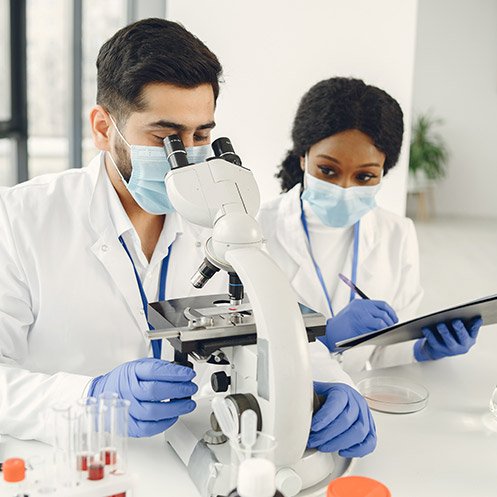
The pharmaceutical industry’s mode of operation is first research and development (R&D). By means of various scientific methods, the researchers study diseases and measure their effects on the human body system.
This phase might take a very long time. Thousands of compounds might be tested before just one is picked for the development phase. Pharmaceutical companies use artificial intelligence and data analytics, very sophisticated technologies to shorten the duration of the drug discovery process. Drug discovery generally includes:
• Researching illness and health conditions
• Finding molecular targets
• Trial of drug candidates
• Performing lab tests and carrying out simulations
Step 2: Pre-Clinical Testing
Pharmaceutical companies conduct pre-clinical studies before testing medicines on humans. These studies are conducted in laboratories and sometimes on animals to determine how the drug works and whether it is safe.
Researchers evaluate:
• Toxicity levels
• Side effects
• Drug absorption
• Effectiveness against disease
Step 3: Clinical Trials
Nowadays, clinical trials may be considered one of the most important stages in the pharmaceutical industry.
Phase I
This stage of the safety & dosage involves testing the new drug in a small group of very healthy individuals.
Phase II
The drug is trialled on patients with the target disease to assess efficacy and side effects.
Phase III
This stage involves evaluating the medication on a large number of individuals to find out if it is safe and effective.
Step 4: Regulatory Approval
Health authorities cannot allow any pharmaceutical products to be released to the market without their approval. Before approval, these regulatory agencies examine all the information obtained from clinical trials, manufacturing processes, and safety data.
The approval process ensures that
• Liable to cause no harm to patients
• Have the capability to provide required medical benefits
• Generally acceptable quality standards
• Comply with requirements for product manufacturing
Step 5: Pharmaceutical Manufacturing
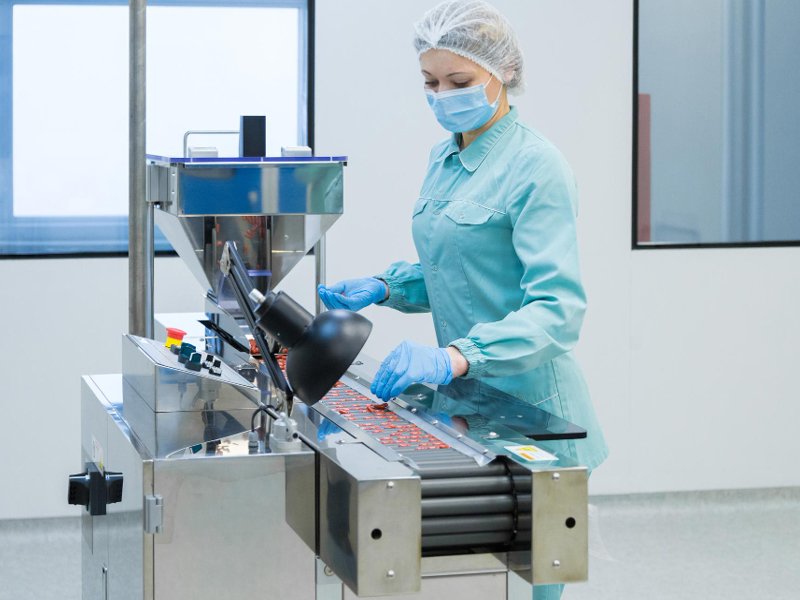
After drugs are approved, they undergo manufacturing, where the drug substances are used to prepare the final pharmaceutical dosage forms (tablets, capsules, syrups, etc.).
Pharmaceutical companies carry out several steps, from starting materials to end products, all under very strict GMP rules. Besides, they implement various tests on each batch before releasing it to the market.
Step 6: Quality Control and Quality Assurance
That is why quality control is an extremely important aspect of the pharmaceutical industry. No medicines on the market are approved before rigorous quality testing.
Pharma firms conduct tests to check:
• Purity of ingredients
• Dosage accuracy
• Stability of medicines
• Packaging quality
• Contamination risks
Step 7: Packaging and Distribution
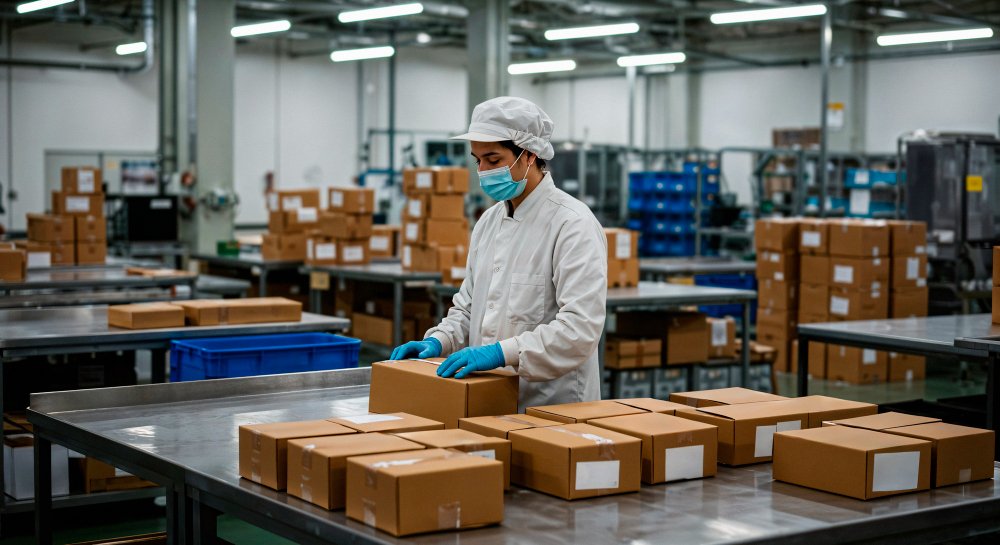
The last phase of a drug after its production and testing is packaging and delivery to the hospitals, pharmacies, clinics, and other establishments that might require the drug. One major function of packaging is to protect the drugs from moisture, heat, contamination, and damage.
Transport of vaccines, for example, is one such case of sensitive items that require a cold-chain system during their journey to the destination.
The Role of Technology in the Pharmaceutical Industry
In 2023 and beyond, the technology landscape in pharma is changing. Automation, robotics, and AI/digital systems have improved production speeds with fewer errors and accelerated the development of medicines.
The uses of technology in modern pharmaceutical companies could be listed below:
• Drug discovery and simulations
• Automated manufacturing systems
• Inventory management
• Data analysis
• Clinical trial monitoring
Looking for a reliable partner in pharmaceutical manufacturing? Ryzer Pharma is the leading manufacturer of innovation-oriented pharmaceutical products, with safety and compliance as top priorities.
Conclusion
Pharmaceutical production refers to a time-consuming and highly regulated process of ensuring the medicines produced are safe, effective and of consistent quality. Top-notch expertise at all levels, quality assurance, and stringent adherence to health regulations are indispensable aspects, not only throughout drug discovery, preclinical lab testing, clinical trials, but also manufacturing and distribution.