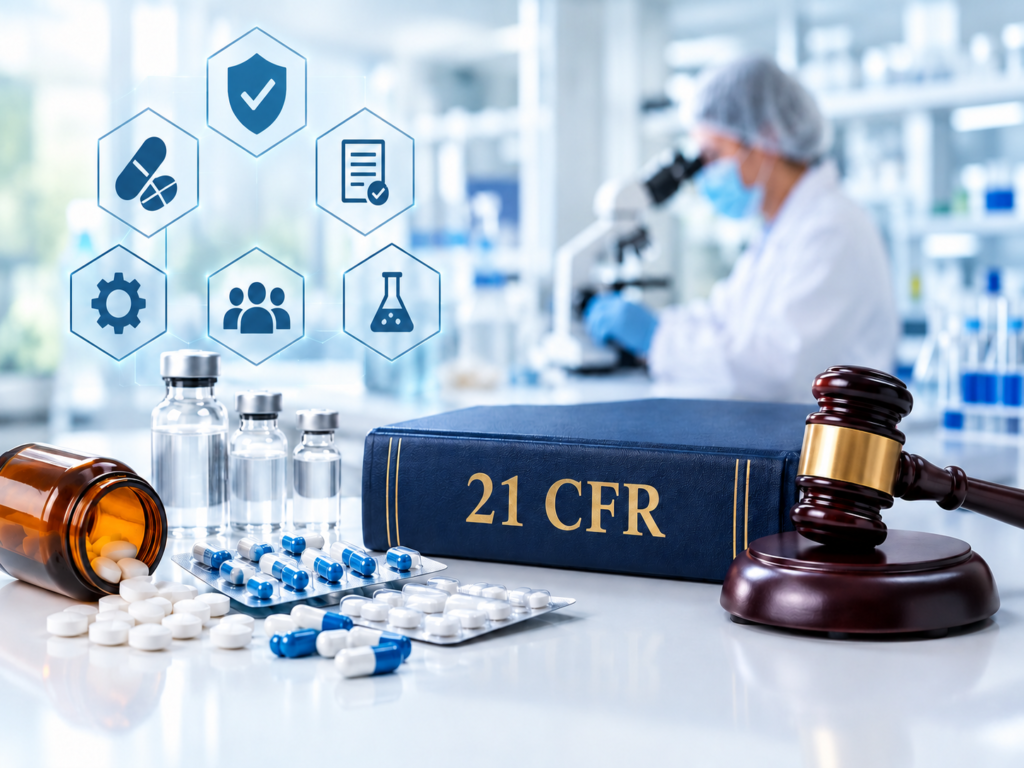
Before a medicine reaches a patient, it must be safe, efficient, and of high quality, but how do pharmaceutical companies ensure the quality of their production? By the CFR which are the rules that pharmaceutical companies in the United States must follow when producing, testing, storing, and distributing medicines.
What Is 21 CFR in the Pharmaceutical Industry?
“21 CFR” stands for “Title 21 of the Code of Federal Regulations, which includes regulations about food, drugs, medical devices, and other products under the control of the US Food and Drug Administration.
The chapter covers how pharmaceutical industries should be set up and how medicines are made, tested, stored, labelled, and managed.
Many of the regulations also apply to clinical trials, the approval of medicines, and the documentation companies must maintain to show they conduct their processes properly.
Therefore, companies need to understand and fulfil all these rules if they are to make and offer medicines on the U.S. market.
Important Parts of 21 CFR in Pharma
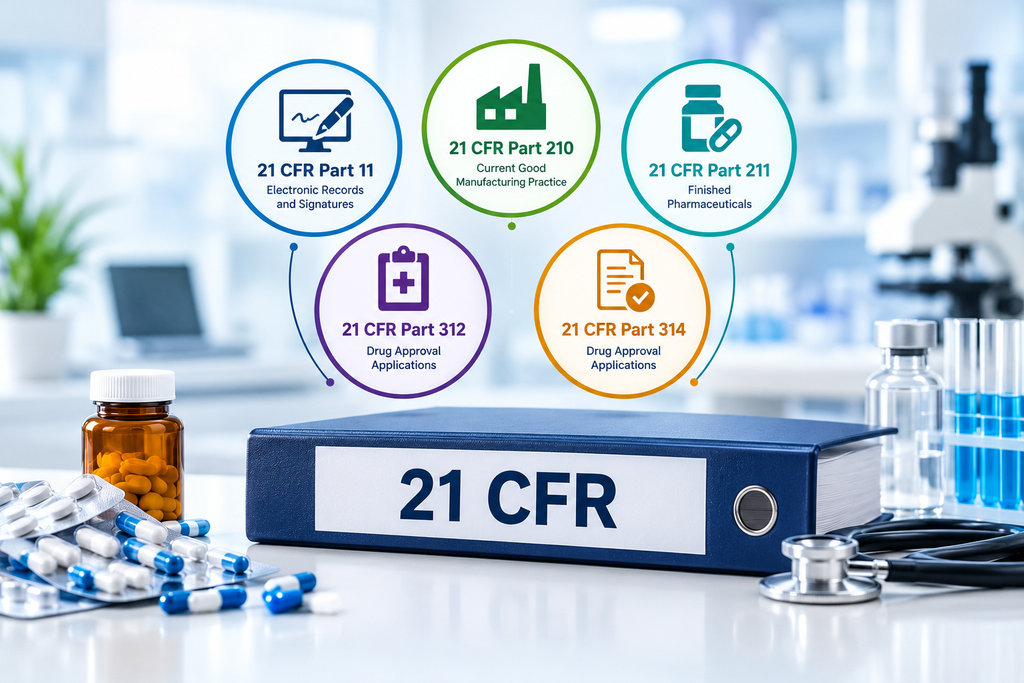
1. 21 CFR Part 11 – Electronic Records and Signatures
It outlines the FDA’s requirements for the use of electronic records plus electronic signatures.
This will enable firms to maintain reliable digital records while also setting requirements for electronic systems and records to which the rule applies.
2. 21 CFR Part 210 – Current Good Manufacturing Practice
Part 210 of the CFR contains general Current Good Manufacturing Practice requirements for manufacturing, processing, packing, and holding certain drugs.
These rules help companies comply with proper manufacturing practices.
3. 21 CFR Part 211 – Finished Pharmaceuticals
CGMP for finished is also available in 21 CFR Part 211.
These include requirements for the following activities.
Control procedures
- Quality control procedures
- Equipment maintenance
- Production processes
- Packaging and labelling
- Storage and recordkeeping
Such requirements are established to help companies be consistent in producing quality medicines.
4. 21 CFR Part 312 – Drug Approval Applications.
Part 312 of CFR is dedicated to investigational new drug applications and related clinical investigation requirements.
It explains which rules apply to the sponsors and investigators completing a clinical study with an investigational drug.
5. 21 CFR Part 314 – Drug Approval Applications
Finally, Part 314 of the CFR covers applications related to new drug products.
This part explains the requirements for submitting an application for the FDA to market a specific drug.
Why Is 21 CFR Important in the Pharmaceutical Industry?
Therefore, the following 21 CFR is vital for pharmaceutical companies. Here are the key reasons.
Ensures Drug Quality
Medicines can only be consumed if they meet the required standards of quality.
The relevant 21 CFR ensures that the company has control over the manufacturing process and can therefore check the products it has manufactured.
Protects Patient Safety
Poor manufacturing may result in the drug being contaminated.
Following the applicable regulations helps reduce these risks and protect patients.
Records will be Properly Maintained.
While abiding by the regulations, drug manufacturing companies need to maintain certain records.
These documents allow for complete transparency into manufacturing processes, test results, and product details.
Contributes to FDA Compliance
With many obligations, companies are required to maintain compliance with the FDA as well.
Failing to meet these requirements can lead to warning letters, product recalls, or other hefty legal and punitive actions against the business.
Adjusts Consistency in Manufacturing
Manufacturing guidelines should be able to provide some consistency in each generated production batch.
This results in a lesser amount of manufacturing errors, keeping the drug exactly as per specification.
How Do Pharmaceutical Companies Follow 21 CFR Requirements?
The systems and procedures appropriate to the needs of pharmaceutical companies to comply with the requirements will be required.
Some of the items typically part of CAPA are as follows:
- Employee training: Train laboratory and manufacturing staff on new procedures and changes in the quality system.
- Quality testing: Periodic testing of raw materials and specifications for finished products.
- Documentation: Keep accurate records of manufacturing and testing. File any corrective actions, preventive actions, and required changes to the quality system.
- Equipment maintenance: Clean, inspect, and maintain equipment on a scheduled basis.
- Internal audits: Conduct self-inspections to identify gaps in your quality system.
- Process validation: Validation of manufacturing processes to ensure consistent results.
These activities help companies plan for regulatory inspections and maintain quality.
Final Thoughts
The CFR is very integral to the pharma sector. It contains regulations for drug manufacturing, testing, approval, and quality control.
Following this guidance will help the pharmaceutical industry remain in compliance and keep drug quality intact.